

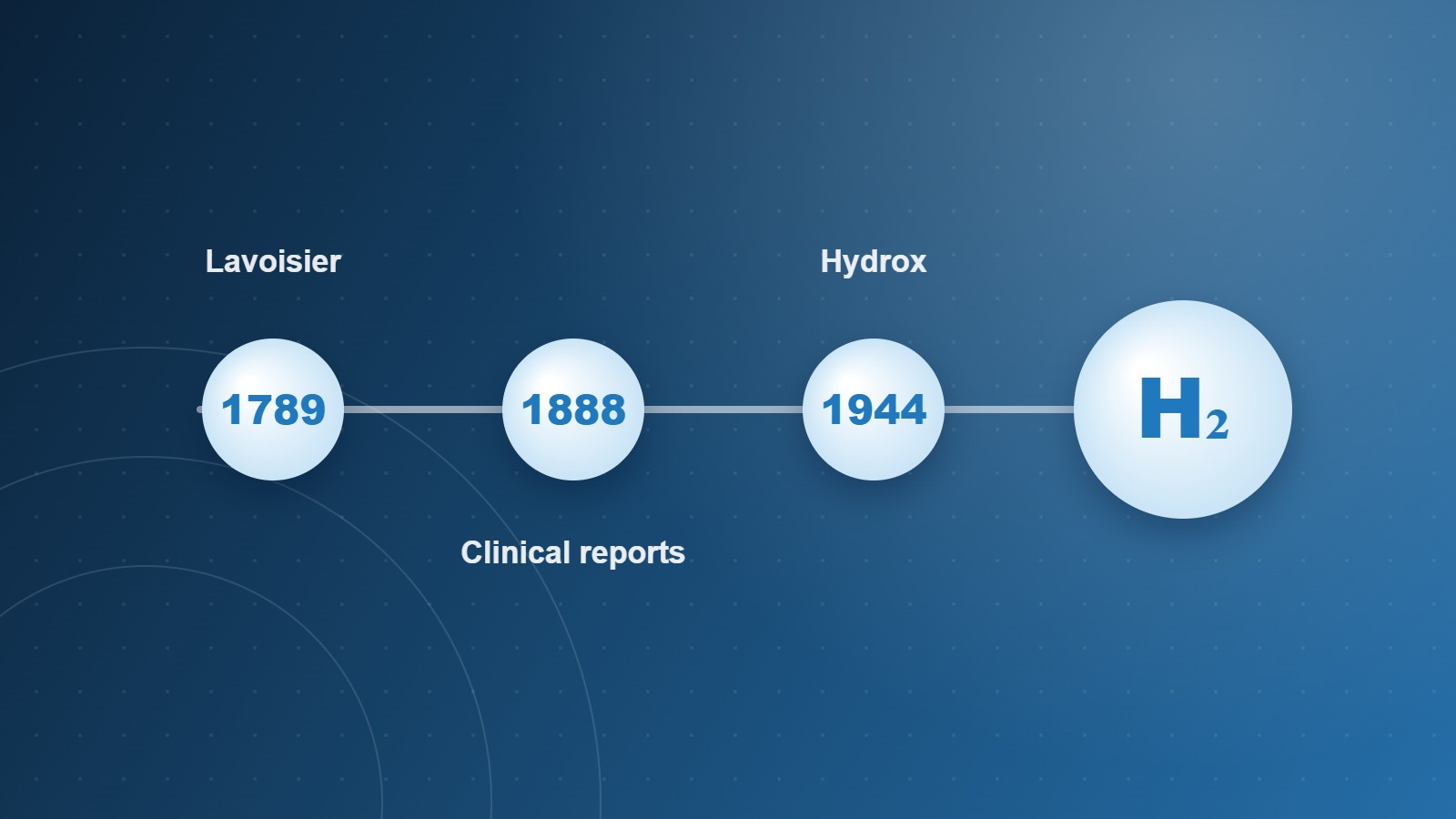
Hydrogen therapy may sound like a recent idea, but its roots go back more than two centuries. Tracing that history helps explain where hydrogen stands today between research and practice.
1789: Lavoisier’s early experiments
The first documented experiments date to 1789, when Antoine-Laurent Lavoisier exposed living subjects to hydrogen while studying the properties of air, at a time when the gas itself was newly discovered.
1888: Early medical reports
In 1888, reports suggested hydrogen could help identify certain internal injuries. Those observations were not followed up with larger research at the time.
1944: Hydrox and deep-sea diving
Arne Zetterström is credited with developing “Hydrox”, a mixture of hydrogen and oxygen (96% and 4%), which allowed deep-sea divers to descend to great depths while reducing the risk of decompression sickness. This is where hydrogen moved from scientific curiosity to practical use.
This article is for general health education only. It does not replace advice from a qualified physician and is not intended to diagnose or treat any condition.
The last two decades
Since the early 2000s the number of studies on molecular hydrogen in health contexts has grown steadily, with delivery methods ranging from inhalation to hydrogen-saturated water. Most findings remain preliminary and need larger, longer clinical trials.
For more detail see the Hydrogen Era page or browse our other articles.
Frequently asked questions
When did serious medical interest begin?
Research interest expanded markedly over the past two decades, although the first experiments are over two centuries old.
Is hydrogen safe to breathe?
It has been used in diving mixtures at specific ratios under expert supervision. Any use should be through certified devices and according to the manufacturer’s guidance.