

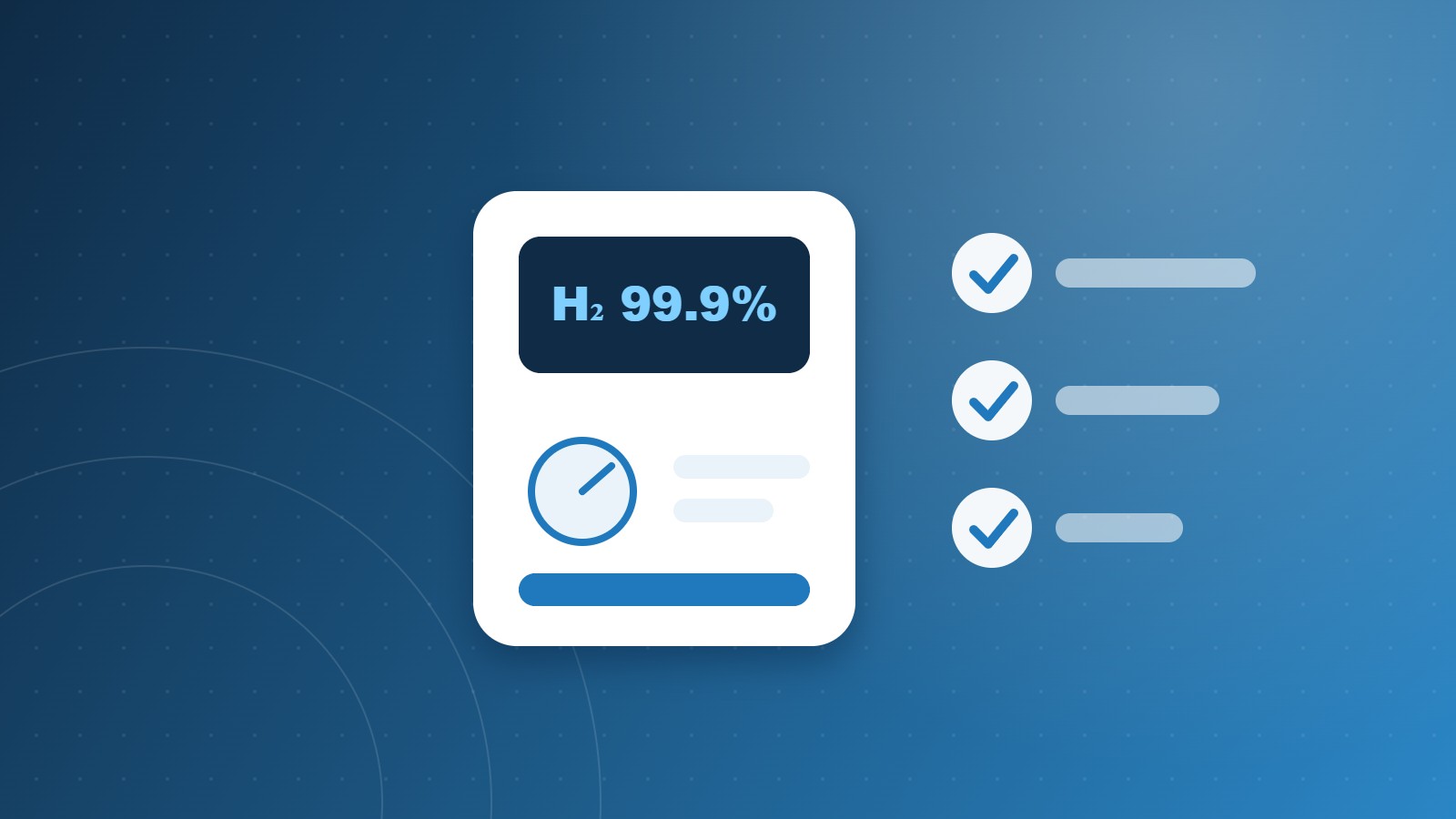
Every hydrogen generator on the market differs widely in technology, quality and price. These six criteria help you compare them objectively before buying.
1. Generation technology
Devices based on a proton exchange membrane (PEM) separate hydrogen from other gases more efficiently than conventional units, which directly affects the purity of the output.
2. Purity and concentration
Ask about hydrogen purity and the flow rate in ml/min for inhalation devices, or the concentration in ppm for water devices, and request documented test reports where available.
3. Certifications
Check for recognized conformity certificates and make sure the product is imported through an authorized agent rather than an informal channel.
4. Build quality
Review the electrode type and the materials in contact with water, since they affect both device lifespan and safety.
5. Operation and maintenance
Devices that require distilled water or periodic cleaning should state this clearly in the user manual.
6. After-sales service
Warranty, spare-part availability and local technical support matter as much as the specifications themselves.
This article is for general health education only. It does not replace advice from a qualified physician and is not intended to diagnose or treat any condition.
Frequently asked questions
What is the difference between inhalation and water devices?
The first produces gas inhaled through a nasal cannula; the second dissolves gas into drinking water. Some devices do both.
Does a higher price always mean better quality?
Not necessarily. Compare technical specifications and certifications, not price alone.
For help choosing the right device, contact us.