

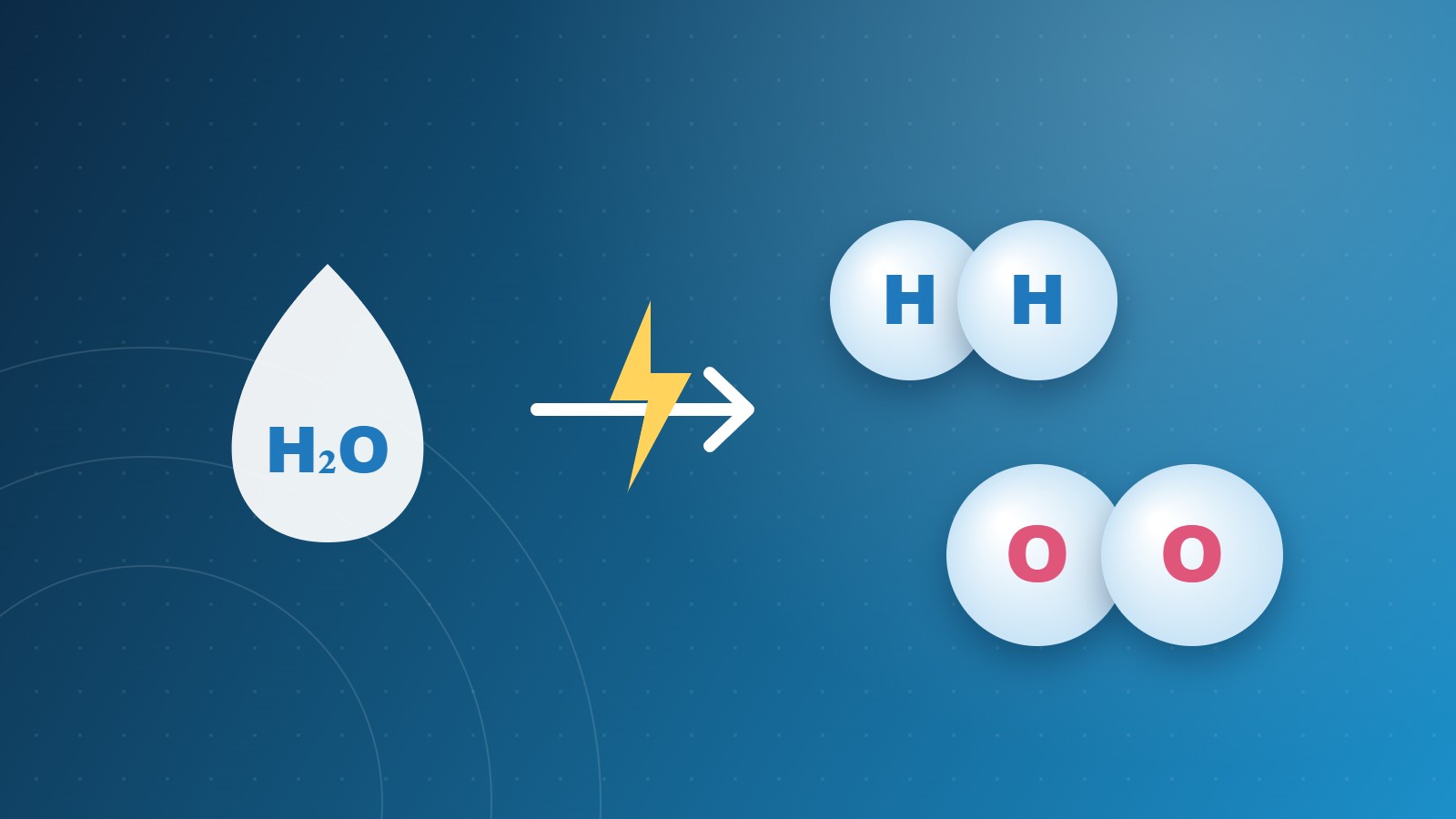
Although hydrogen is the most abundant element in the universe, it exists in Earth’s atmosphere only in very low concentrations. Hydrogen gas production therefore means separating it from compounds that contain it, water above all.
1. Water electrolysis
Passing an electric current through water splits its molecules into hydrogen and oxygen. This is the most common method in small and home devices, and its only input is water.
2. Processing organic compounds
Hydrogen can be obtained by treating organic compounds thermally or chemically. These are large-scale industrial methods.
3. By-product recovery
Hydrogen is produced as a by-product in some industrial reactions, then collected and purified.
Why the method matters
Because purity is the decisive difference. Gas intended for health applications needs high purity and freedom from contaminants, which technologies such as proton exchange membranes (PEM) are designed to achieve, as covered in our guide to choosing a hydrogen generator.
This article is for general health education only. It does not replace advice from a qualified physician and is not intended to diagnose or treat any condition.
Frequently asked questions
Does free hydrogen exist in nature?
Only at very low atmospheric concentrations, so it is produced industrially when needed.
What is the difference between grey and green hydrogen?
The label refers to the energy source used in production. More in our green hydrogen article.
For more questions see our FAQ page.